
Der Ring des Nibelungen

Anne Evans as Brünnhilde in Harry Kupfer's Ring production at Bayreuth.
Der Ring des Nibelungen (The Nibelung's Ring / The Ring of the Nibelung) is called "ein Bühnenfestspiel für drei Tage und einen Vorabend" (a stage festival drama for three days and a preliminary evening).
- Das Rheingold (Vorabend)
- Die Walküre (Erster Tag)
- Siegfried (Zweiter Tag)
- Götterdämmerung (The Twilight of the Gods; Dritter Tag)
Der Ring des Nibelungen had its world premiere at the first festival in Bayreuth in 1876. Three cycles were performed. Richard Wagner was stage director and Hans Richter was the conductor. Artists and celebrities from all over the world had come to Bayreuth to be a part of this event. The next time the complete Ring was produced in Bayreuth was in 1896.
A new Ring production by Christof Loy to premiere at the National Opera, Oslo, Norway in 2026...
“I am full of this Tetralogy … It soaks into you like water into sand.”
Gabriel Fauré, 8 August 1896
The first complete Ring productions

1876: Bayreuth Festival
1878: München
1879: Wien
1880: Hamburg
→ All productions of Der Ring des Nibelungen at Bayreuth Festival here
Richard Wagner: Der Ring des Nibelungen (Staatsoper Unter den Linden, Berlin. Dimitri Tcherniakov, Christian Thielemann)
(available in Germany or with VPN)
Das Rheingold
Die Walküre
Siegfried
Götterdämmerung
Tcherniakov Ring, Staatsoper Berlin
→ Tcherniakov: Das Rheingold, Staatsoper Berlin, 2022
→ Tcherniakov: Die Walküre, Staatsoper Berlin, 2022
→ Tcherniakov: Siegfried, Staatsoper Berlin, 2022
→ Tcherniakov: Götterdämmerung, Staatsoper Berlin, 2022
Premiere cast at the first Bayreuther Festspiele 1876
Das Rheingold: Cast 13 August 1876
Conductor Hans Richter
Wotan Franz Betz
Loge Heinrich Vogl
Fricka Friederike Grün
Freia Marie Haupt
Donner Eugen Gura
Froh Georg Unger
Erda Luise Jaide
Alberich Karl Hill
Mime Karl Schlosser
Fasolt Albert Eilers
Fafner Franz von Reichenberg
Woglinde Lilli Lehmann
Wellgunde Marie Lehmann
Flosshilde Minna Lammert
Die Walküre: Cast 14 August 1876
Conductor Hans Richter
Siegmund Albert Niemann
Sieglinde Josephine Schefsky
Hunding Josef Niering
Wotan Franz Betz
Fricka Friederike Grün
Brünnhilde Amalie Materna
Gerhilde Marie Haupt
Ortlinde Marie Lehmann
Waltraute Luise Jaide
Schwertleite Johanna Jachmann-Wagner
Helmwige Lilli Lehmann
Siegrune Antonie Amann
Grimgerde Hedwig Reicher-Kindermann
Rossweisse Marie Lammert
Siegfried: Cast 16 August 1876
Conductor Hans Richter
Siegfried Georg Unger
Mime Karl Schlosser
The Wanderer Franz Betz
Alberich Karl Hill
Fafner Franz von Reichenberg
Waldvogel (the woodbird) Marie Haupt
Erda Luise Jaide
Brünnhilde Amalie Materna
Götterdammerung: Cast 17 August 1876
Conductor Hans Richter
Siegfried Georg Unger
Brünnhilde Amalie Materna
Gunther Eugen Gura
Gutrune Mathilde Weckerlin
Hagen Gustav Siehr
Alberich Karl Hill
Waltraute Luise Jaide
First Norn Johanna Jachmann-Wagner
Second Norn Josephine Schefsky
Third Norn Friederike Grün
Woglinde Lilli Lehmann
Wellgunde Marie Lehmann
Flosshilde Minna Lammert
Reports from the first performances
So there was much in 1876 that could never be repeated – Wagner, of course, in his full creative power and the splendid setting of Bayreuth that gave us such freedom for expression. As Rhine-maidens we played our part to the full – gay and capricious of mood at the beginning of Rheinhold and grave in our solemn warning to Siegfried in the last act of Götterdämmerung. And here I must mention that I always sang in my part in Rheingold – ‘Nur wer der Minne Macht entsagt’ never versagt as I always heard it sung later. I drew Levi’s attention to this in 1884 at Munich, when he wanted me to sing ‘versagt’ instead of ‘entsagt’.
Lilli Lehmann in her memoirs
The Danish newspaper Svendborg Amtstidende wrote the following on 18 August 1976:
"The Festival Performances in Bayreuth. A telegram from Bayreuth on August 13th to "Reuters Bureau" reports the following about the first performance: "The first performance of the prelude 'Rheingold' to the Nibelung Trilogy took place today at 7 pm. The house was filled to the last seat. About twenty people were seen in the royal box, including the Emperor of Brazil who also attended the performance. Emperor Wilhelm was greeted with a storm of cheers upon his entrance. The audience included many German celebrities from all areas of the arts and sciences. All the performers distinguished themselves with a rare precision in their dramatic performances.
The music performed by the invisible orchestra, the magnificent decorations, and the artificial machinery enraptured the audience several times with the most lively applause. The lighting and presentation of fog and water vapors had a magical effect. At each scene change, this fog and water vapor would settle over the stage, and then the new decorations would emerge from the fog.
At the end of the performance (at 9:30 pm), Richard Wagner was called to the stage but declined the ovation intended for him. After the performance, Emperor Wilhelm drove through the festively illuminated streets of the city in an open carriage with the Grand Duchess of Baden and was greeted with enthusiasm everywhere."
"National-Zeitung" received an original telegram shortly after the performance, which stated: "The performance lasted from 7:10 pm to 9:30 pm without interruption and in African heat. The whole thing makes a varied impression; alongside great beauty, many repetitions and childishness can be found in the magic play [“mange Gjentagelser og Barnagtigheder i Tryllespillet”]. The covered orchestra is also of significant effect. The ending is also emotionally gripping in the scenic presentation, but the first scene between the gods and giants made a tiring impression."
Ring performances the first years after the world premiere:
| 1878 | München/Leipzig |
| 1879 | Wien |
| 1880 | Hamburg |
| 1881 | Berlin (Angelo Neumann's travelling Wagner-Theatre with guest performances in Berliner Viktoria-Theater) |
| 1882–1883 | Angelo Neumann's travelling Wagner-Theatre on tour: London (Her Majesty's Theatre), Breslau, Königsberg, Danzig, Hannover, Bremen, Barmen, Dresden, Amsterdam, Brüssel, Aachen, Düsseldorf, Mainz, Darmstadt, Karlsruhe, Strassburg, Stuttgart, Basel, Venice, Bologna, Rome, Torino, Triest, Budapest, Graz – totaling 135 performances of the Ring! |
Said about Der Ring des Nibelungen
James Levine, Musical Director, The Metropolitan Opera
Wagner’s Ring is one of those works of art that you think you know, but every time you return to it, you find brilliant moments that hadn’t struck you with the same force before.
Peter Tchaikovsky on Der Ring des Nibelungen
Wagner's tetralogy is so complicated and so finely detailed that much time is necessary for a study of it - and it really ought to be heard often.
In a letter to Modeste Tchaikovsky, written 14 August 1876 (Bayreuth - The Early Years)
Edvard Grieg
Every performance is so exhausting emotionally that it leaves one quite worn out.
Edvard Grieg, 17 August 1876
The Bayreuth Festival 2022 - Reviews by Mark Berry and Sam Goodyear
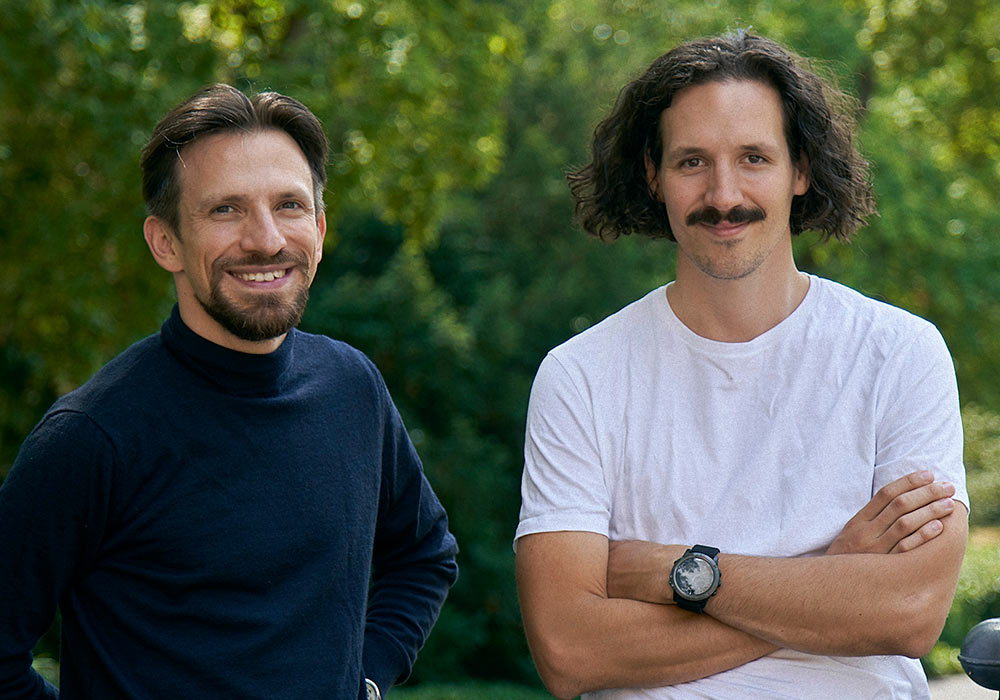
Cornelius Meister and Valentin Schwarz. (Photo: Enrico Nawrath, Bayreuter Festspiele)
→ Das Rheingold (Valentin Schwarz / Cornelius Meister) - Bayreuth Festival 2022
→ Die Walküre (Valentin Schwarz / Cornelius Meister) - Bayreuth Festival 2022
→ Siegfried (Valentin Schwarz / Cornelius Meister) - Bayreuth Festival 2022
→ Götterdämmerung (Valentin Schwarz / Cornelius Meister) - Bayreuth Festival 2022
- All productions of Der Ring des Nibelungen at Bayreuth Festival here.
- The titles of Richard Wagner's operas in different languages
Siegfried's death and Funeral march
Klaus Tennstedt, London Philharmonic, Suntory Hall (Tokyo, Japan)
Wolfgang Wagner
Wolfgang Wagner's Ring production 1974. Franz Mazura, Theo Adam, Jean Cox. Das Rheingold. Götterdämmerung.
Der Ring des Nibelungen: Articles and Reviews
Nila Parly on Regietheater: Visions of the Ring
The Cry of the Valkyrie: Feminism and Corporality in the Copenhagen Ring
Sam Goodyear, Bayreuth 2022: Der Ring des Nibelungen (Valentin Schwarz)
Mark Berry, Bayreuth 2022: Das Rheingold (Valentin Schwarz)
Mark Berry, Bayreuth 2022: Die Walküre (Valentin Schwarz)
Mark Berry, Bayreuth 2022: Siegfried (Valentin Schwarz)
Mark Berry, Bayreuth 2022: Götterdämmerung (Valentin Schwarz)
Mark Berry: Bayreuth 2017: Das Rheingold (Frank Castorf / Marek Janowski)
Mark Berry: Bayreuth 2017: Die Walküre (Frank Castorf / Marek Janowski)
Mark Berry: Bayreuth 2016: Das Rheingold (Frank Castorf)
Mark Berry: Bayreuth 2016: Die Walküre (Frank Castorf)
Mark Berry: Bayreuth 2016: Siegfried (Frank Castorf)
Mark Berry: Bayreuth 2016: Götterdämmerung (Frank Castorf)
Mark Berry: Bayreuth 2014: Das Rheingold (Frank Castorf)
Mark Berry: Bayreuth 2014: Die Walküre (Frank Castorf)
Mark Berry: Bayreuth 2014: Siegfried (Frank Castorf)
Mark Berry: Bayreuth 2014: Götterdämmerung (Frank Castorf)
Per-Erik Skramstad: Bayreuth 2013: There Will Be Blood: Frank Castorf Has Entered the Ring
Per-Erik Skramstad: Bayreuth 2010: Curtain Down on Tankred Dorst's Ring
Mark Berry: 2010 Cassiers Ring
Sam Goodyear: Laufenberg’s Wiesbaden Ring 2017
Jerry Floyd: Rheingold, Metropolitan 2010
Jerry Floyd: Die Walküre, Metropolitan 2010
Jerry Floyd Washington National Opera: Siegfried
Jerry Floyd Washington National Opera: Siegfried II
Jerry Floyd Washington National Opera: Götterdammerung Concert (2009)
Jerry Floyd Washington National Opera: Götterdammerung Concert (2009)
Mark Berry: Richard Wagner für Kinder – Der Ring des Nibelungen (2011)
Bayreuth 2022: More Reviews
The Ring
Review: A New ‘Ring’ at Bayreuth Does Wagner Without Magic. Valentin Schwarz’s production of the four-opera epic presents human characters with relations even more tangled than usual. (Zachary Woolfe, The New York Times)
Das Rheingold
In der Neuproduktion von Richard Wagners "Der Ring des Nibelungen" bei den Bayreuther Festspielen bringt Regisseur Valentin Schwarz das Epos feministisch auf Zack. (Süddeutsche Zeitung)
Valentin Schwarz inszeniert „Rheingold“ bei den Bayreuther Festspielen als Auftakt seines „Ring des Nibelungen“. Schlimmer als die Regie sei der Dirigent und die meisten Sänger, sagt unser Kritiker. Er hofft auf die anderen drei Teile. (Deutschlandfunk Kultur)
Im Stil einer Netflix-Serie will der junge Regisseur Valentin Schwarz Wagners "Ring" in Bayreuth erzählen: als Familiensaga, die in unserer Gegenwart spielt. Eingesprungen für den an Corona erkrankten Dirigenten Pietari Inkinen ist Cornelius Meister. (BR Klassik)
Das Rheingold review – no ring, no gold, instead child abuse and abduction drive Bayreuth’s new Ring. Austrian director Valentin Schwarz’s new Ring presents the bold and searing idea that the original sin that drives Wagner’s world of power is the abuse of children. Can it be sustained? (Martin Kettle, The Guardian)
Das Licht der Welt erblicken auch zwei Kinder, die wir im Vorspiel in einer Videoprojektion sehen, die sich wohl schon im Mutterleib spinnefeind sind – Wotan und sein „Schatten“ (C. G. Jung) Alberich. Der Beginn einer großen spannenden Sage? (Matthias Lachenmann)
Am Sonntagabend feierte "Das Rheingold" von Regisseur Valentin Schwarz Premiere bei den Bayreuther Festspielen. Wagners Mythos wird in dieser Neuinterpretation zur Familiensaga der Gegenwart. (Norddeutscher Rundfunk)
„Rheingold“ in Bayreuth Valentin Schwarz lässt Wagners Symbolik leiden: Dass da noch niemand draufgekommen ist: Göttervater Wotan und sein Kontrahent Alberich sind Zwillingsbrüder. Im Video wird die Es-Dur Ursuppe des „Rheingold“-Vorspiels zur Fruchtblase, in der sich zwei Babys friedlich schlafend wiegen. Bis eines dem anderen das Auge aussticht und das andere den einen entmannt. (Kölnische Rundschau)
Nach 25 Minuten kommt es in jedem „Rheingold“ zum Schwur. Alberichs Fluch auf die Liebe im Gegenzug fürs Edelmetall - nur taucht es an diesem Abend gar nicht auf. Denn was ist tatsächlich das Kostbarste? Da wird Regisseur Valentin Schwarz moralisch: Es sind die Kinder, unser aller Hoffnung. Sie werden von diesem abgehalfterten Western-Desperado entführt, auf dass er sie zusammenpferchen und umerziehen kann. (Münchner Merkur)
„Das Rheingold“ in Bayreuth: Poolparty mit Kindesentführung. Der Auftakt mit „Das Rheingold“ war brav und fern von großartig. (Tiroler Tageszeitung)
Die Walküre
Bühnenunfall, Buhgewitter und ein unrunder Ring: Eine Schrecksekunde, ein Bühnenunfall und ein Einspringer, der bejubelt wird. Heftige Buhgewitter gab es auch. Die galten offenbar der Regie von Valentin Schwarz. Der erzählt die Handlung der "Walküre" weiter als Familiensaga im Netflix-Stil. Ein ereignisreicher Abend mit überragenden, traurigen und mittelmäßigen Momenten. (BR Klassik)
Der Ring nimmt an Fahrt auf, was vor allem einer Reihe von exzellenten Sänger:innen zu verdanken ist. Im ersten Aufzug begeistern Georg Zeppenfeld als sonorer, klarer und bösartiger Hunding und Lise Davidsen als präsente Sieglinde, mit einer bombigen Mittellage, über die sie Tiefen und Höhen eindrücklich erreicht. Auch Klaus Florian Vogt kann begeistern, selbst wenn ihm die Partie eigentlich zu tief liegt. (Matthias Lachenmann)
Der Bayreuther «Ring»-Regisseur Valentin Schwarz inszeniert Wagners großes Musikdrama um Gold und Gier, Zwerge und Drachen als moderne Serie über eine verkorkste Familie. Vor allem mit dem Familienoberhaupt gibt es Probleme. (Schwarzwälder Bote)
Siegfried
Schnitzeljagd für Wagner-Nerds: Der schreckliche Drache ist ein todkranker, uralter Mann. Siegfried zieht ihm den Rollator weg, worauf er einen Herzschlag bekommt. Außerdem wird er sicherheitshalber noch erstochen und erstickt. Und so weiter. Ständig ist man am Rätseln und Entziffern. Was erzählt Wagner, was erzählt Schwarz, was ergibt die Differenz. Ergibt sie was? (Bernhard Neuhoff, BR Klassik)
Nachdem man den ersten beiden Abenden viel Positives abgewinnen konnte, überrascht nun Cornelius Meister mit einem zupackenden Dirigat und gutem Zusammenspiel mit dem Orchester, während die Solisten leider schwächeln und die Inszenierung vielen Zuschauern den letzten Nerv raubt. (Matthias Lachenmann)
Götterdämmerung
In der Trash-TV-Sendung „Die Geissens“ erlebt der Zuschauer das Leben einer reichen, wohlstandsverwahrlosten und prolligen Familie, was Valentin Schwarz – nach dem ersten Aufzug der Götterdämmerung zu urteilen – zu seiner Ring-Inszenierung inspiriert hat. Dabei denken wir natürlich gleich an das Rheingold und die Walküre, wo ebenfalls eine reiche Familie zu sehen ist, so dass sich der Ring zur Götterdämmerung schließt. Nur: Was interessieren uns „die Geissens“? (Matthias Lachenmann)
Bayreuther Festspiele: Ob dieser «Ring» zu retten ist, wissen die Götter. Valentin Schwarz erntet für seine wenig schlüssige Neuinszenierung von Richard Wagners «Ring des Nibelungen» fast einhellige Ablehnung. Bei der Musik gibt es Hoffnung, aber die Arbeit muss jetzt erst richtig beginnen. (Christian Wildhagen, Neue Zürcher Zeitung)
Intellektuell und sinnlich erweist sich der neue Bayreuther „Ring“ schließlich als das Fiasko, an das man zuvor drei Abende lang trotzdem nicht glauben konnte. (Judith von Sternburg, Frankfurter Rundschau)
Lohengrin
Christian Thielemann bringt Bayreuth zurück, wo es musikalisch hingehört! (Klaus Billand, 5. August 2022, für klassik-begeistert.de und klassik-begeistert.at)
CASTORF / WAGNER Der Ring des Nibelungen 2013-2017: Bilingual book (French/German)
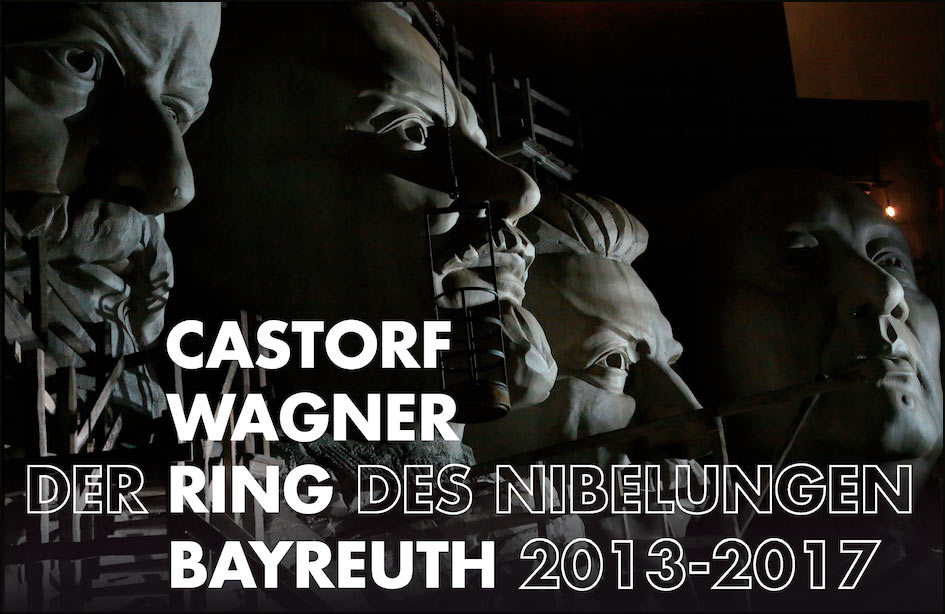
CASTORF / WAGNER Der Ring des Nibelungen 2013-2017: Bilingual book (french/german) about Frank Castorf's Ring production at Bayreuth edited by Guy Cherqui and David Verdier (Wanderer, Geneva)
Essays and Interviews Katharina Wagner (artistic director, Bayreuth), Frank Castorf (stage director), Aleksandar Denic (stage designer), Patric Seibert (assistant/actor), Adriana Braga Peretzki (costume designer), Wolfgang Koch (Wotan), Nadine Weissmann (Erda)...
Ring ABC
62 entries by Guy Cherqui and David Verdier
Specifics 26x17 cm 384 pages 200+ color plates, most of them exclusive photos
La Pommerie Éditions in collaboration with the Wanderer website ISBN 978-2-9564912-0-0 Info castorf.ringbook@wanderersite.com
More info here!
With essays by, and interviews of, the main architects of this project, this book aims for an in-depth analysis of the main lines of enquiry of a work that has already assured its place among the greatest Bayreuth productions. Frank Castorf’s theater has found in Wagner an ideological and polemic sounding board that echoes our most extreme issues of the day. The second part of the book is a lexicon of characters, themes and references that offers both readers and viewers points of orientation in the Castorfian Gesamtkunstwerk.


